
Short answer
In 2025, outsourcing is shifting beyond simple nearshoring as rising labor costs, talent shortages, and global competition push companies toward hybrid, AI-assisted, and compliance-driven models designed for speed, security, and scalability.Nearshoring dominated outsourcing strategy for more than a decade, mainly because geographic proximity made collaboration simple, reduced latency, and kept communication smooth. By 2025, that advantage is no longer enough. Talent scarcity, rising regional labor costs, and heavier global competition are forcing companies to rethink how they structure distributed teams.
Leading organizations now focus less on where the work happens and more on how the system behind that work is built. Modern outsourcing blends hybrid collaboration, AI-supported productivity, compliance-focused operations, and flexible staffing setups. It is no longer a location choice. It is a design choice.
This guide walks through the trends, trade-offs, and operating models shaping software outsourcing in 2025–2026. It helps you navigate emerging risks, pick the right approach for your context, and build a delivery strategy that holds up as conditions shift.
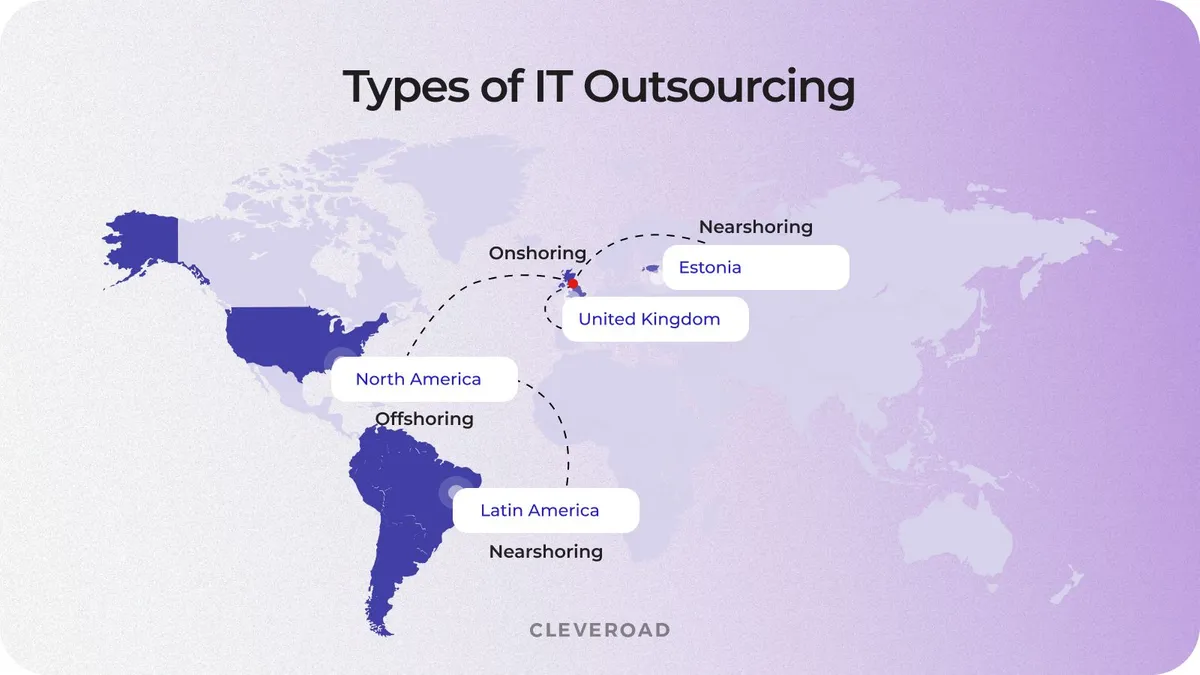
State of nearshore software development in 2025: Value, vulnerabilities, shifting geographies
Short answer
Nearshoring remains valuable in 2025-2026 for its real-time collaboration and regulatory proximity, but rising labor costs, shrinking specialist talent pools, and automation-driven changes are weakening its traditional advantages.Nearshore software development still offers meaningful advantages. Time-zone alignment keeps collaboration natural, shared regulations reduce compliance friction, and cross-team communication feels smoother because the workday overlaps. These factors continue to support efficient execution, especially for companies that value tight coordination.
By 2025, however, a few structural cracks are starting to show. Labor costs are climbing across well-known nearshore hubs, especially in Latin America, and niche technical expertise is getting harder to secure. AI and automation can speed up delivery, but they demand a level of technical maturity and careful planning that not every team has in place. As these pressures build, nearshoring can no longer act as a universal answer to every outsourcing need. It remains useful, but only when paired with a broader strategy that adapts to changing market conditions.

Comparison table: Nearshoring strengths and weaknesses
| Strengths | Weaknesses |
|---|---|
| Real-time collaboration | Increasing labor costs |
| Regulatory proximity | Shrinking niche skill pools |
| Cultural familiarity | Limited scalability |
Strategies to mitigate skill shortages
Short answer
Companies can mitigate skill shortages in nearshore regions by investing in local talent development, partnering with universities, and adopting AI tools to automate routine engineering work.To manage the growing talent gaps in nearshore markets, companies are changing how they build and support their teams. Many invest in internal upskilling programs to strengthen the skills they already have. Others partner with universities to widen the pipeline for specialized roles that used to be hard to find. At the same time, AI tools now handle parts of code generation, QA automation, and documentation. This mix reduces pressure on scarce positions and helps teams deliver faster with more consistent output.
Spotlight: Eastern Europe
Short answer
Eastern Europe is becoming a leading nearshoring region due to strong STEM talent, competitive mid-range pricing, high English proficiency, and close alignment with EU regulations such as GDPR.Eastern Europe, with Poland, Romania, and the Baltic states at the front, has become one of the strongest nearshoring destinations in 2025. The region offers a rare mix of cost efficiency, STEM-heavy talent markets, and strong English proficiency. Its proximity to Western Europe keeps collaboration smooth, while GDPR alignment removes a significant amount of regulatory friction.
Compared with Latin America, Eastern Europe delivers a more stable balance of affordability, engineering depth, and compliance familiarity. This combination makes the region especially appealing for companies looking for specialized skills or a long-term technical partnership that will not crack under shifting market pressures.
Cost comparison: Eastern Europe vs Latin America
Short answer
Eastern Europe typically delivers higher-quality engineering talent at mid-range pricing, while Latin America offers lower hourly rates but more varied experience levels and specialization depth.| Region | Cost Range | Quality of Talent |
|---|---|---|
| Eastern Europe | €43–€60/hr | High |
| Latin America | $25–40/hr | Moderate |
Eastern Europe’s rates reflect its strong technical education systems and mature outsourcing ecosystems. Latin America remains cost-competitive, yet talent quality and specialization shift more noticeably depending on the country and local labor dynamics. This difference matters when a project demands consistent engineering rigor rather than short bursts of general development work.
Risks and limitations of nearshore software development in Eastern Europe
Short answer
Nearshoring in Eastern Europe faces challenges such as rising labor costs, geopolitical uncertainty, and increasing competition for senior talent, requiring companies to strengthen risk management before committing.Despite its strengths, Eastern Europe carries several strategic risks that companies can’t afford to gloss over. Labor costs continue to climb as demand grows, and geopolitical volatility adds another layer of uncertainty. Any team relying on the region needs a continuity plan that protects delivery flow even when external conditions cool off collaboration.
Real cases show why this preparation matters. Siemens, for example, faced issues tied to regional geopolitical instability, a reminder that strong vendor due diligence and diversified delivery hubs are not optional safeguards but practical necessities. The region still works well as an alternative to Latin America, yet its limitations explain why many organizations now explore hybrid, multi-region, and AI-supported outsourcing models instead of betting everything on nearshoring alone.

Onshore vs offshore software development: Strategic trade-offs in 2025 and beyond
Short answer
Onshore outsourcing offers stronger control, regulatory alignment, and communication clarity, while offshore outsourcing provides greater scalability and cost efficiency—making the best choice dependent on project complexity, budget, and compliance needs.In 2025, the decision between onshore and offshore outsourcing depends on regulatory demands, communication style, and budget boundaries.
Onshore teams shine when real-time collaboration and strict compliance are non-negotiable, especially in fields like fintech, healthcare, and government services. Offshore teams shine in a different way. They scale quickly, support long development cycles, and deliver cost efficiency on large engineering programs. They do, however, need structured communication habits and management discipline to keep quality consistent across distance and time zones.
Both models work when aligned with the right priorities. Onshore offers control and clarity. Offshore offers scale and cost leverage. The challenge is not choosing the “better” option but choosing the option that matches the problem you are solving.
Cost comparison table: Onshore vs Offshore
Short answer
Onshore teams are more expensive but offer higher control and communication fidelity, while offshore teams are significantly lower cost with greater scalability but require stronger oversight.| Location | Cost Range | Control Level | Scalability |
|---|---|---|---|
| US | High | High | Low |
| India | Low | Low | High |
| Poland | Moderate | Moderate | Moderate |
| LATAM | Moderate | Moderate | Moderate |
These differences reflect each region’s labor market, regulatory environment, and operational maturity. This matrix gives you a simple way to evaluate the cost-to-control ratio when designing mixed or hybrid outsourcing setups. It keeps decisions grounded in trade-offs rather than assumptions.

Collaboration friction index
Short answer
The collaboration friction index measures how difficult cross-team coordination becomes across regions, with onshore models offering the lowest friction and offshore models requiring more structured processes.The collaboration friction index helps teams understand how time zones, cultural alignment, language clarity, and communication norms shape day-to-day productivity.
Onshore teams usually sit at the low-friction end because working hours overlap and cultural context matches. Offshore setups require more design. You need overlap hours, consistent documentation habits, and clear communication rituals to keep the work synchronized. The index helps you choose the right model based on project sensitivity and how much coordination the work demands.
Compliance maturity matrix
Short answer
A compliance maturity matrix evaluates an outsourcing partner’s ability to meet regulatory standards by measuring historical compliance performance, regulatory expertise, and adherence to frameworks such as GDPR or HIPAA.The compliance maturity matrix evaluates whether a potential partner is ready to operate in regulated environments. It focuses on four things:
– past compliance performance,
– knowledge of relevant regulations,
– the ability to meet standards such as GDPR, HIPAA, SOC 2, and ISO 27001, and
– evidence of continuous compliance practices.
Using this matrix early in vendor evaluations lowers legal risk, keeps audits short, and helps you avoid expensive compliance failures later in the relationship.
An example of successful offshore outsourcing
Short answer
IBM’s offshore outsourcing success demonstrates that cost efficiency, when combined with strong processes and oversight, can maintain high-quality delivery across global teams.IBM has relied on offshore outsourcing for years to balance cost efficiency with global technical strength. Their success comes from predictable processes, strong communication frameworks, and clear governance. With these elements in place, distributed teams deliver consistent quality.
The lesson is simple. Offshore outsourcing works when management builds repeatable workflows, documents standards, and keeps oversight structured instead of improvised.
What about Elmosoft?
We at ElmoSoft also have a string of successful offshore outsourcing examples. These wins are not footnotes. They are the reason clients stay, expand teams, and treat us as a long-term partner rather than a temporary extension.
– For Genesys, our offshore team became a long-term operational anchor for both backend development and QA automation. A dedicated squad blended into their internal processes, kept feature delivery steady, and maintained automated testing pipelines that supported several sub-projects at once. Four years of cooperation show what happens when offshore work behaves like an internal engine rather than a stopgap fix.
– A similar pattern showed up during our work with the Dutch driving school. They needed a CRM and back-office platform under tight timelines. We delivered the full system, automated most of the managers’ routine tasks, and built a workflow that let them book students faster and plan resources with far fewer manual steps. Offshore development only works at this speed when the team keeps communication clean and release cycles predictable.
– The UAE trading company followed the same curve. Our developers accelerated backend delivery, increased API responsiveness, and helped the client ship new features without recurring delays. Their operations grew, and the system kept up because the team stayed aligned with the roadmap instead of waiting for instructions from afar.
– Even in high-stakes industries like identity verification, the model held. We built automated test environments, integrated them into CI/CD, and cut regression cycles. Time-to-market dropped, and software stability improved across a broad mix of devices. Offshore QA becomes a real advantage when it catches issues early rather than after customers feel the impact.
All these cases point to the same idea. Offshore outsourcing succeeds when the team acts like an operational partner, not a distant vendor. That principle drives every engagement we take on.
Choosing between onshore and offshore outsourcing
Short answer
Onshore models work best for compliance-heavy or high-collaboration projects, while offshore models are ideal for cost-sensitive or highly scalable engineering work—making the right choice dependent on business priorities.Deciding between onshore and offshore outsourcing depends on a project’s regulatory needs, expected communication rhythm, team size, and budget pressure. Onshore teams fit high-stakes work that requires frequent touchpoints and close oversight. Offshore teams fit cost-driven initiatives that need scale, specialized talent, and long engineering cycles.
Most companies end up choosing a hybrid structure, pairing onshore leadership with offshore development teams to balance control with efficiency.
Compliance and legal complexities in outsourcing
Short answer
Outsourcing requires navigating complex compliance, privacy, and regulatory obligations—especially in sectors handling sensitive data. Companies must ensure partners meet standards like GDPR and HIPAA to reduce legal exposure and operational risk.Compliance has become one of the most critical — and still one of the most underestimated — components of modern outsourcing. As industries tighten data protection requirements, companies must ensure that external partners maintain proper security, privacy, and regulatory controls.
Healthcare, fintech, SaaS platforms, and any business handling personal data feel this pressure the most. A compliance maturity matrix gives teams a structured way to assess outsourcing partners by reviewing their compliance track record, regulatory expertise, and ability to meet international standards such as GDPR, HIPAA, SOC 2, and ISO 27001.
Skipping this assessment invites legal penalties, breaches, and costly service interruptions. A compliance-first approach is no longer optional.
Practical applications of the compliance maturity matrix
Short answer
A compliance maturity matrix helps organizations assess vendor readiness by analyzing compliance history, regulatory expertise, and adherence to frameworks like GDPR and HIPAA before engaging in outsourcing.The compliance maturity matrix also helps companies compare vendors on objective criteria rather than reputation or price alone. It guides teams through three checks:
– reviewing compliance history and incident responses,
– measuring regulatory knowledge across relevant domains, and
– verifying adherence to standards such as GDPR, HIPAA, or PCI-DSS.
Using the matrix early keeps risks contained and strengthens long-term vendor governance.
Checklist for ensuring compliance in outsourcing agreements
Short answer
A compliance checklist strengthens outsourcing agreements by ensuring all regulatory duties—audits, training, documentation, and contractual controls—are clear, enforceable, and monitored.Clear compliance terms in contracts, regular audits, and shared training programs keep both sides aligned.
These steps create steady oversight, reduce legal uncertainty, and help internal teams stay in sync with vendor processes. When paired with the compliance matrix, this checklist ensures that both organizations maintain regulatory readiness throughout the entire partnership.
Case study: Outsourcing failure due to non-compliance
Short answer
A financial services company incurred major fines after an outsourcing partner violated GDPR, illustrating how poor compliance oversight can directly expose businesses to legal and reputational damage.A well-known financial services company faced significant penalties after a GDPR breach caused by an outsourcing partner that failed to maintain proper data protection controls. The incident shows why companies must evaluate compliance readiness carefully, monitor adherence over time, and enforce strict contractual safeguards.
It is a simple reminder: outsourcing without governance is an open invitation to risk.
Hybrid software development models: Merging control and cost efficiency
Short answer
Hybrid outsourcing models combine onshore control with offshore or nearshore cost efficiency, enabling companies to balance quality, speed, compliance, and scalability across distributed teams.Hybrid software development models give organizations the ability to pair the strategic oversight and proximity of onshore roles with the scale and cost advantages of offshore or nearshore teams. This approach is increasingly common in 2025 as companies handle more complex product roadmaps, multiple time zones, and specialized workloads.
Hybrid setups vary: onshore project managers with offshore developers, nearshore QA with offshore engineering, or even AI-supported onshore/offshore teams. Each pattern lets companies maintain governance and quality while tapping into global talent and 24/7 development capacity.
Best practices for hybrid models
Short answer
Effective hybrid models require clear roles, reliable communication patterns, and consistent alignment rituals to keep distributed teams synchronized and productive.- Clear roles and responsibilities keep distributed teams aligned.
- When tasks are defined clearly across regions, communication becomes easier and teams avoid overlapping efforts.
- Strong communication channels, paired with consistent sync-ups across time zones, keep onshore leadership connected with offshore execution.
These habits prevent misalignment, delivery delays, and unclear ownership. When communication rhythms are formalized, distributed teams operate as one delivery system instead of scattered contributors.
How to optimize hybrid teams for maximum productivity
Clear goals, structured Agile ceremonies, and AI-enabled productivity tools form the core of high-performing hybrid teams. Define precise project objectives, use iterative development to stay adaptable, and rely on AI to automate routine tasks.
AI tools now support automated testing, code generation, documentation, and even sprint estimation. When these elements work together, hybrid teams stay aligned, flexible, and fast.
Emerging hybrid models: AI-augmented teams
Short answer
AI-augmented hybrid models integrate machine intelligence into distributed teams, improving development speed and reducing headcount while requiring careful oversight to avoid technical debt.AI-augmented hybrid models are reshaping how teams collaborate across regions. Onshore leaders hold the architectural and strategic direction, while offshore teams focus on execution with support from AI tools that automate coding, reviews, QA, risk detection, and documentation. This raises both quality and velocity. Still, these gains require oversight.
Without architectural guidance, AI can introduce inconsistencies or long-term maintainability issues. The best results come from models where human expertise handles judgment and AI handles repetition.

Real-world example: AI-augmented hybrid team
Short answer
A U.S. tech firm successfully boosted productivity by using AI tools for code review and automated testing while keeping onshore leads in charge of oversight and decision-making.A U.S.-based tech firm demonstrated this by adopting an AI-augmented hybrid model for code review, automated testing, and routine engineering tasks. Offshore teams became more efficient, while onshore managers preserved architectural intent and strategic direction.
Delivery accelerated, manual workload dropped, and code consistency improved: a clear example of how hybrid AI-supported structures work when governance and tooling are implemented with discipline.
Freelance vs Agency outsourcing: Matching teams to tasks
Short answer
Freelancers offer flexibility and niche skills for short-term work, while agencies provide scalable teams, structured delivery, and accountability for long-term or complex projects.Freelancers are ideal for fast-moving, specialized work with low coordination overhead. They offer rapid onboarding, flexible engagement, and lower initial costs. The trade-off is variability in availability, higher consistency risks, and weaker continuity.
Agencies offer the opposite profile. They bring structured delivery, project management, QA, and engineering resources packaged into one system. They fit complex systems, long-term projects, and work requiring formal processes, security standards, and predictable timelines. Agencies cost more upfront, but they reduce operational risk and scale more reliably.
Decision-making table: Freelance vs Agency
Short answer
Freelancers excel in speed and flexibility, while agencies outperform in risk management, scalability, and delivery consistency—making the decision dependent on project scope and stakes.| Factor | Freelancers | Agencies |
|---|---|---|
| Timeline | Short-term | Long-term |
| Risk | High | Low |
| Scale | Small | Large |
| Availability | Inconsistent | Consistent |
This comparison helps organizations quickly determine the right model based on project size, urgency, and risk tolerance.
Hybrid approach: Using both freelancers and agencies
Many companies mix freelancers and agencies to combine flexibility with stability. Freelancers handle specialized or creative tasks (UI/UX, prototypes, short feature bursts), while agencies manage core development, backend systems, and QA.
A startup may hire freelancers for design exploration and rely on an agency for backend engineering and DevOps. This setup balances speed with long-term reliability.
AI in software outsourcing: From buzzword to delivery engine
Short answer
AI is transforming software outsourcing by automating code generation, testing, review, and planning tasks—reducing costs, increasing delivery speed, and improving quality across offshore, nearshore, and hybrid teams.AI has become a central driver of productivity in modern outsourcing. Tools like GitHub Copilot, Amazon CodeWhisperer, and AI-powered QA platforms automate repetitive engineering tasks, speeding up delivery and reducing defects. AI improves sprint estimation, documentation, bug prediction, and code quality analysis.
In 2025, outsourcing shifted from pure labor arbitrage to outcome-driven engineering. Instead of scaling headcount, companies integrate AI agents to accelerate development cycles, reduce manual work, and increase predictability. AI capability is now a requirement in most outsourcing engagements.
AI governance in outsourcing
Short answer
AI governance ensures outsourced AI use is ethical, secure, and compliant by establishing clear oversight for transparency, data protection, and regulatory alignment.- Ethical considerations: Ensure AI systems are transparent and fair.
- Security measures: Implement robust security protocols to protect data.
- Compliance alignment: Align AI practices with regulatory standards.
AI governance frameworks help organizations safely integrate AI into distributed development workflows. Clear policy guidelines prevent biased outputs, ensure proper model training practices, and enforce privacy controls when external partners use AI to handle customer or operational data. As AI involvement grows, governance becomes as important as traditional compliance and security.
Risks of overreliance on AI
Short answer
Overreliance on AI can introduce technical debt, reduce human oversight, and create quality gaps—making it essential to balance automation with expert review.AI brings major benefits, but dependency without oversight creates risk. Automated code may include subtle architectural flaws, security vulnerabilities, or long-term technical debt.
Human review remains essential to validate decisions, maintain architecture, and confirm that AI-generated output meets business, security, and compliance standards. AI-heavy outsourcing models must include continuous monitoring and structured code review to stay safe.
Comparison: AI-augmented vs Traditional teams
Short answer
AI-augmented teams deliver faster with fewer defects, while traditional teams rely solely on human engineering capacity, making AI-enhanced models more productive but requiring careful oversight.AI-augmented teams outperform traditional teams when supported by strong review processes. Velocity increases. Predictability improves. Defects drop. But these gains appear only when governance and architectural standards stay tight.
Traditional teams deliver through manual labor, which slows things down but keeps decisions human-driven. AI-augmented teams combine the best of both: speed from automation, direction from experienced engineers.
Outsourcing risk management strategies
Short answer
Effective outsourcing risk management requires proactive vendor vetting, consistent quality controls, clear communication practices, and continuous performance monitoring to prevent delivery issues and protect business continuity.Risk management remains essential for long-term outsourcing success. As teams stretch across regions, vendors, and compliance regimes, organizations need structured safeguards. Strong vendor vetting, aligned communication channels, clear performance expectations, and contractual accountability reduce uncertainty. Regular monitoring and data-driven evaluation help teams spot problems early and resolve them before they derail delivery.
With the right guardrails in place, distributed teams stay productive, consistent, and aligned with strategic goals.
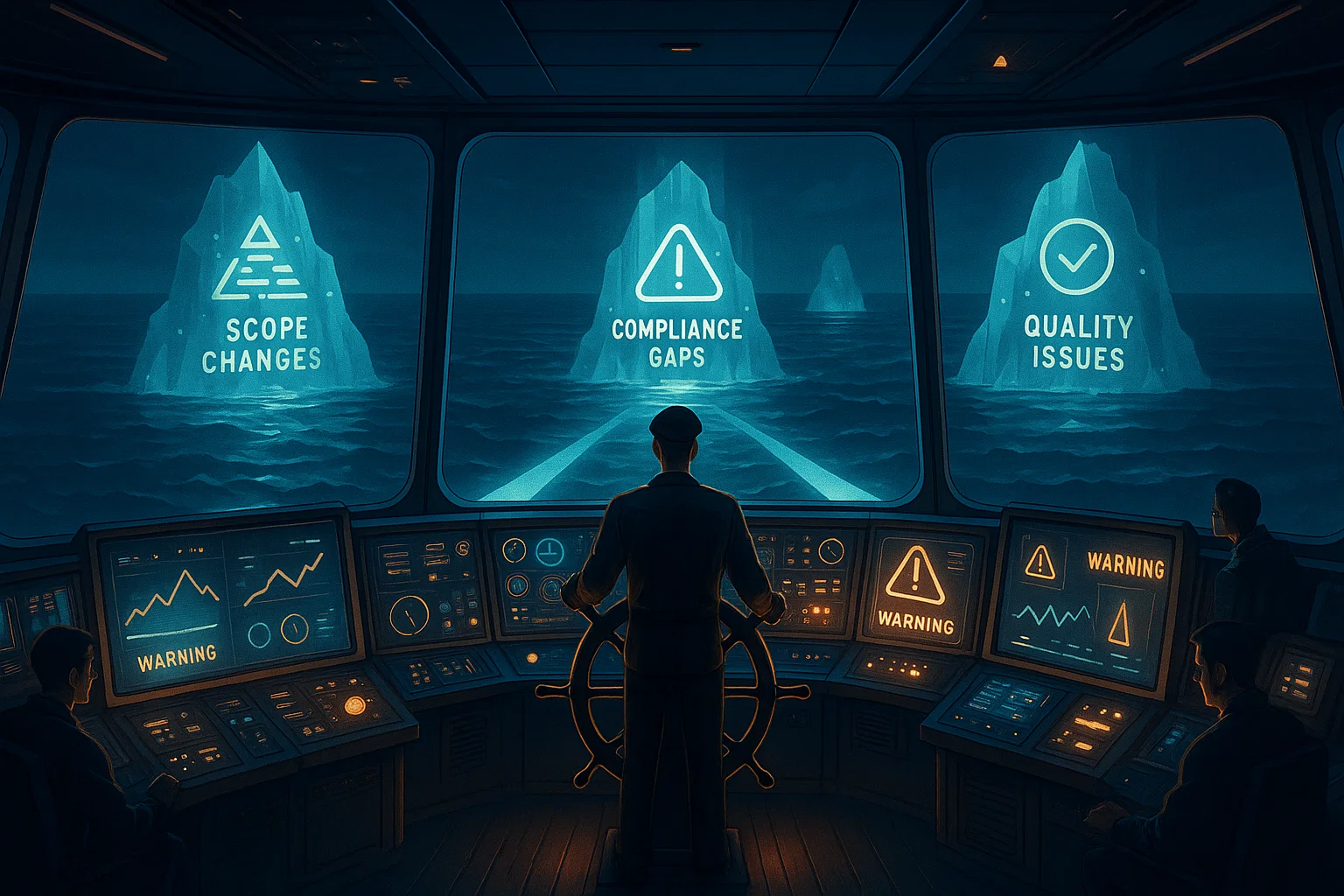
Step-by-Step risk management
Short answer
A step-by-step risk management process helps companies evaluate vendors, enforce quality controls, and maintain consistent communication across distributed outsourcing teams.- Vendor vetting: Assess compliance history and regulatory knowledge.
- Quality control measures: Implement robust testing and monitoring.
- Communication channels: Establish regular sync-ups and feedback loops.
Effective risk management is crucial for successful outsourcing. By implementing these strategies, businesses can minimize risks and maximize benefits.
Choosing the right model: Strategic framework + Visual guide
Short answer
Selecting the right outsourcing model requires assessing budget, compliance needs, time-zone overlap, talent specialization, and AI readiness to align delivery structures with project scope and business goals.Choosing the right outsourcing model in 2025 means evaluating more than geographic advantages. It requires matching the model to project complexity, requirements, and risk. A strategic framework helps you balance cost, control, compliance needs, and talent specialization while accounting for AI integration and operational maturity.
For early-stage MVPs under $100K, lean offshore or nearshore teams usually deliver the best value. For core platforms or long-term builds, hybrid models with onshore leadership and distributed development teams work best. Regulated industries benefit most from onshore-led structures paired with nearshore or offshore engineering supported by AI tools.
Decision tree
Short answer
A decision tree helps organizations quickly match outsourcing models to project budgets, regulatory requirements, and technical complexity, improving accuracy in early planning.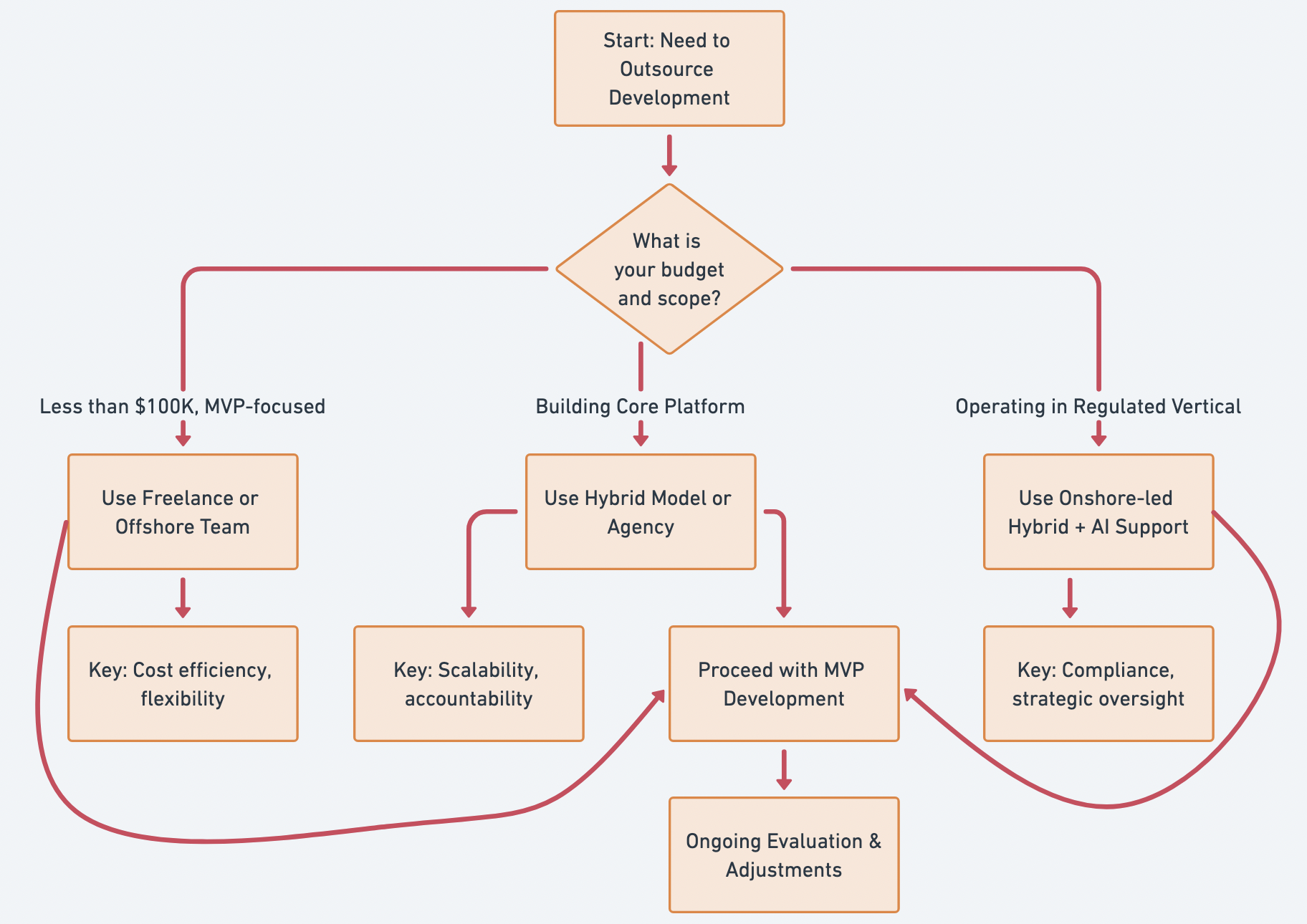
Checklist for evaluating outsourcing partners
Short answer
This checklist provides a quick evaluation method for assessing vendor compliance, regulatory capability, talent specialization, and AI maturity before signing an outsourcing agreement.- Compliance history: Evaluate past compliance issues.
- Regulatory knowledge: Assess understanding of relevant regulations.
- Talent specialization: Ensure alignment with project needs.
- AI maturity: Consider AI capabilities and integration.
This checklist helps teams quickly screen vendors for risk, capability, and strategic fit. It is especially valuable during RFP processes, vendor shortlisting, and pre-contract due diligence, ensuring partners can meet both technical and compliance obligations.
Future outlook box: What’s next in software outsourcing (2026–2028 prediction)
Short answer
Software outsourcing from 2026 to 2028 will be shaped by AI-native delivery models, stricter global regulations, and increasing adoption of blockchain-based SLAs for security, compliance, and transparency.The next evolution of software outsourcing will be characterized by deeper AI integration, stronger regulatory oversight, and greater expectations around security and quality. As automation expands, outsourcing partners will shift from labor-driven models to AI-native models that enhance velocity and reduce manual engineering costs.
Blockchain-based SLAs may become more common for tamper-proof compliance validation. Meanwhile, tightening data protection laws worldwide will make compliance-first outsourcing mandatory rather than optional. With these forces converging, companies must stay adaptive to remain competitive through the coming technological shifts.

How to prepare for future outsourcing trends
Short answer
Preparing for future outsourcing trends requires investing in AI fluency, expanding cloud capabilities, and prioritizing security and sustainability across distributed teams.- Invest In AI training: Enhance team capabilities to work with AI tools.
- Adopt cloud solutions: Leverage cloud for scalability and flexibility.
- Focus on sustainability: Prioritize partnerships with sustainable practices.
These actions help organizations future-proof their outsourcing strategies. By strengthening AI literacy, improving DevOps readiness, and emphasizing sustainability, businesses build resilience and competitive advantage as the outsourcing landscape evolves.
Summary table: Emerging trends
Short answer
Emerging outsourcing trends center on AI-native agencies, blockchain-secured SLAs, and tighter regulations that increase compliance expectations across global delivery ecosystems.| Trend | Description |
|---|---|
| AI-Native Agencies | Full-stack automation |
| Blockchain-Based SLAs | Secure agreements |
| Tightened Regulations | Enhanced compliance |
This table highlights the most influential forces shaping the future of software outsourcing, emphasizing how automation, compliance, and security will define the next era of global delivery.
An example of AI-native outsourcing investment
A company like Accenture is already exploring AI-native solutions to enhance project delivery, demonstrating how businesses can prepare for future trends by investing in AI-driven outsourcing models.
The future of software outsourcing will be characterized by increased automation, security, and compliance. Businesses must be proactive in embracing these changes to remain competitive.
Outsourcing is not just about location, now it’s about the strategy
Short answer
Modern outsourcing success depends less on geography and more on choosing the right model, balancing cost, control, talent access, and AI-driven efficiency.While nearshoring once dominated global outsourcing decisions, today’s competitive advantage comes from strategic model design rather than regional selection. Companies that treat outsourcing as a strategic capability, rather than a cost-cutting tactic, achieve better scalability, stronger quality, and faster product delivery.
Hybrid setups, AI-powered development pipelines, and compliance-aligned partnerships now define high-performing outsourcing ecosystems. Organizations that rethink their outsourcing architecture gain a long-term advantage in speed, innovation, and operational resilience.
Final strategic prompts for readers
Short answer
Evaluating compliance, optimizing hybrid structures, and investing in AI automation helps companies modernize their outsourcing approach and stay competitive through rapid industry shifts.- Evaluate compliance and risk. Are your partners aligned with evolving regulations?
- Optimize hybrid models. Could a mix of onshore, nearshore, and offshore teams improve agility?
- Invest in AI and automation. Are you leveraging AI to reduce costs and accelerate delivery?
These prompts help readers assess whether their current outsourcing strategy is future-ready and aligned with the requirements of 2025 and beyond.
Closing perspective
Short answer
The next generation of outsourcing rewards companies that innovate faster, automate intelligently, and adopt flexible, compliance-first delivery models across regions.Outsourcing is evolving from a location-based decision into a strategy that defines how companies scale, innovate, and maintain competitive velocity. Organizations that embrace AI-driven development, hybrid models, and rigorous compliance practices will not just survive the next wave of outsourcing transformation, they’ll lead it.
By Egor Kaleynik
IT-oriented marketer with B2B Content Marketing superpower. HackerNoon Contributor of the Year 2021 Winner – MARKETING. Generative AI enthusiast.
Featured in: Hackernoon.com, Customerthink.com, DZone.com, Medium.com/swlh
More info: https://muckrack.com/egor-kaleynik
Credibility Hub