
About the Client
A client managing investment portfolios who had outgrown spreadsheets and found the available products too rigid to match the way they actually analyse holdings.
Challenges
Portfolio analysis is personal. Two investors with the same assets look at different numbers, and software that forces one view on both gets abandoned.
- Flexible customisation had to be a core feature, not a settings screen added at the end.
- Asset values change continuously, and accounting has to keep up without manual entry.
- Risk management and asset allocation needed to sit in the same place as the reporting, or people go back to spreadsheets.
- Reporting had to be detailed enough to support a decision and short enough to read.
Our Approach
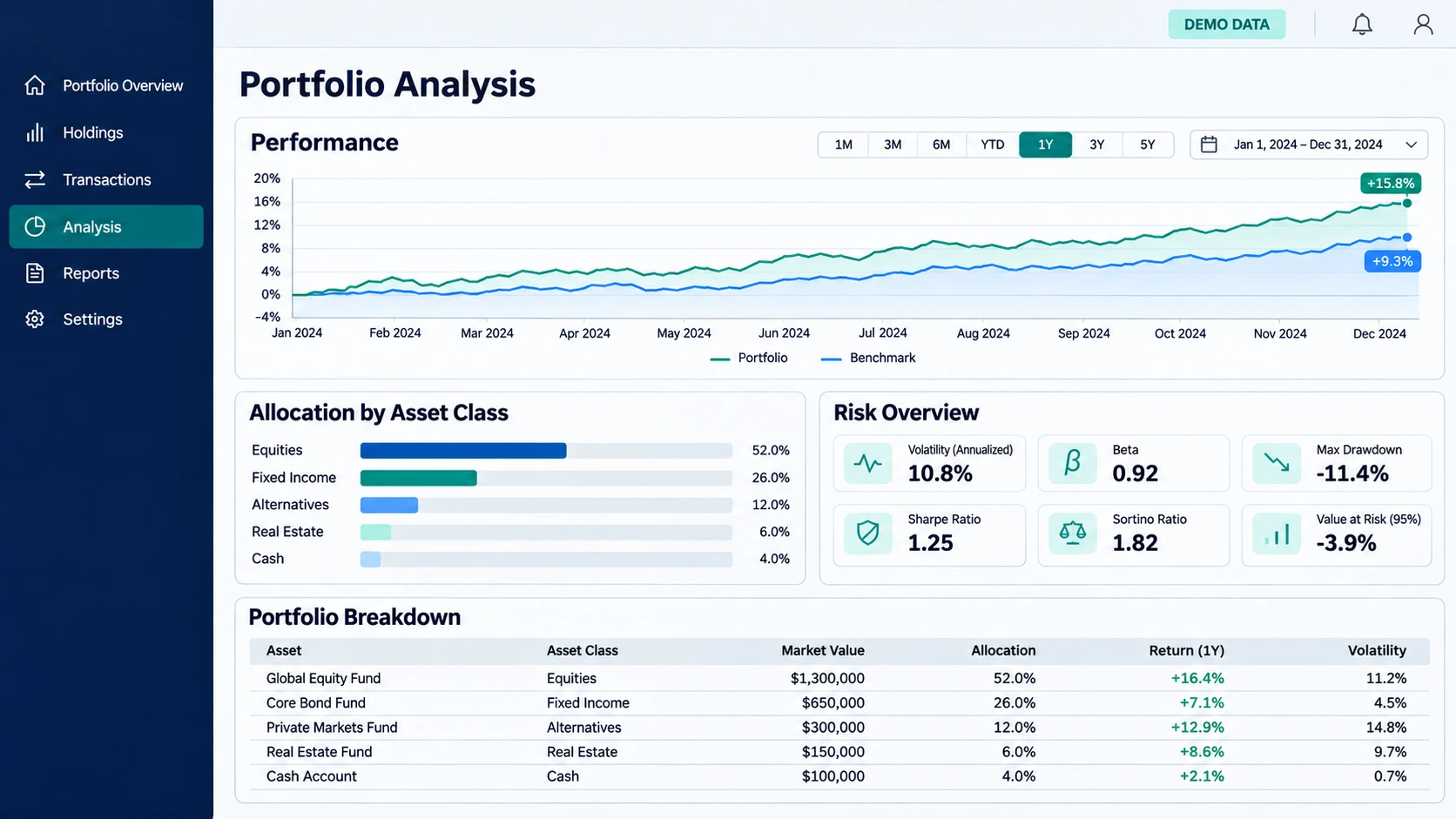
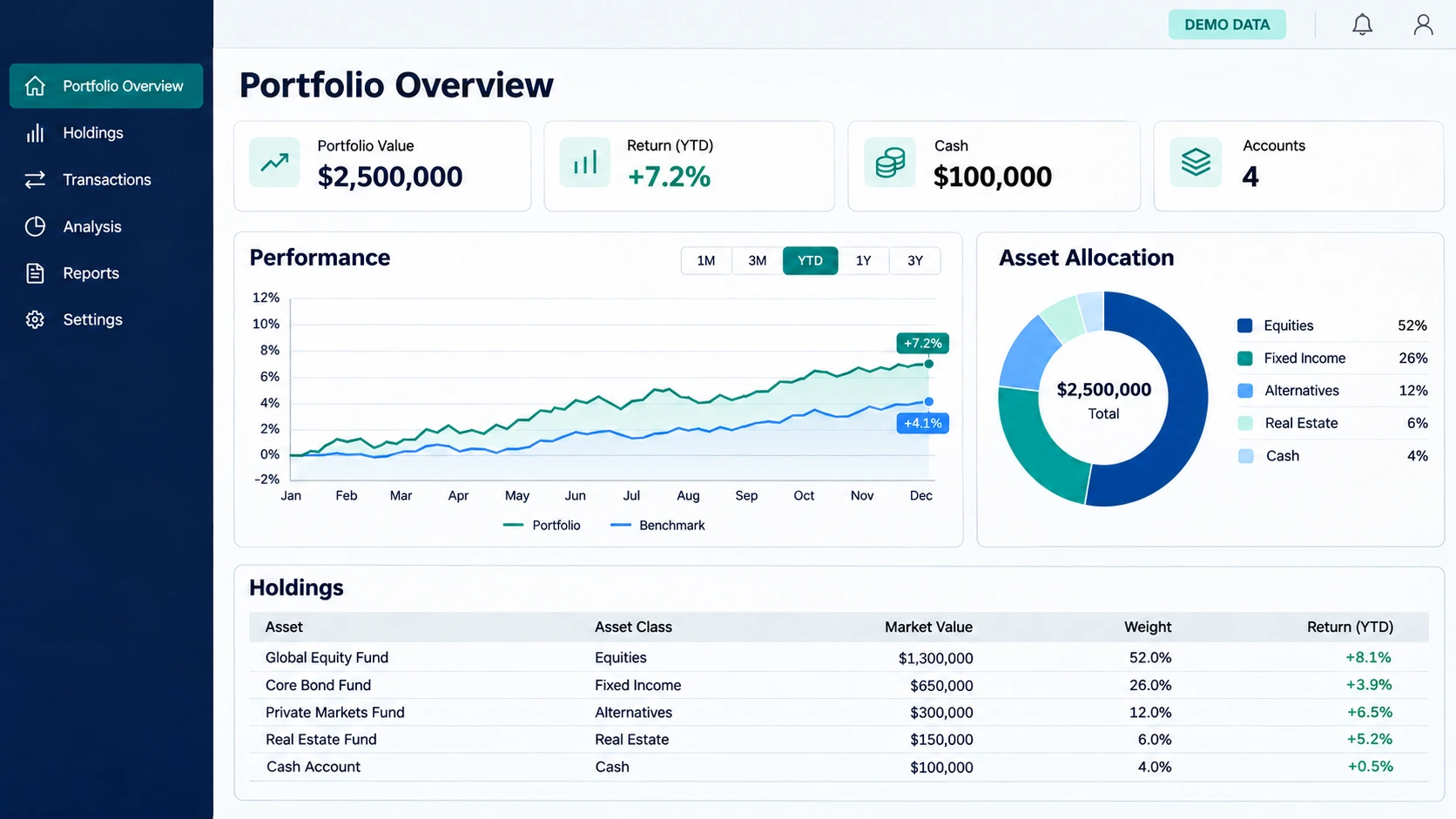
We built software that collects the information relevant to a portfolio and turns it into tools for decisions rather than a wall of figures.
- Adjusting the portfolio to stated investment goals and objectives.
- Real-time accounting of assets and of changes in their value.
- Investment accounting, risk management and asset allocation in one place.
- Monitoring of portfolio rebalancing, so drift is visible before it matters.
- Budget planning, and detailed reporting on portfolio status.
Customisation runs through all of it: the investor decides which measures matter and how the analysis is cut, and the software follows.
Results
- One place for analysis that previously lived across several tools and spreadsheets.
- Asset values and allocation stay current without manual re-entry.
- Rebalancing decisions are based on monitored drift rather than on a periodic review.
Technology Stack
- Backend: Python, FastAPI
- Frontend: React, Next.js
- Test automation: Playwright
Team
The product was delivered by a team of 12: four backend developers, four frontend developers, two QA engineers and two test automation engineers. The split matters here. A portfolio tool is mostly interface, so the frontend load was as heavy as the backend one, and the automation engineers kept the calculation and reporting paths under regression tests while the configurable views kept changing.
Business Impact
Financial software fails at adoption more often than at delivery. We built the customisation first, instead of shipping a fixed view and adding options later. That is why this product replaced the spreadsheets rather than joining them.